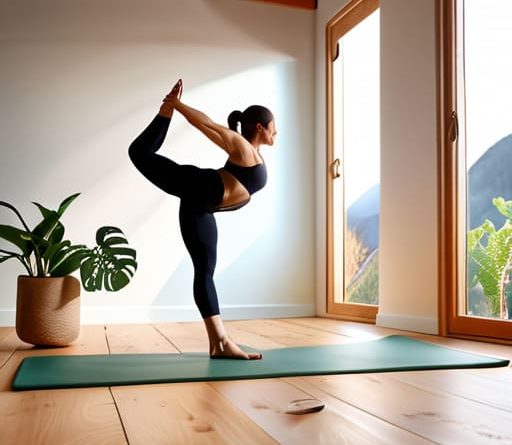
Yoga for Beginners: Poses to Start With Today
I still remember sitting on my living room floor three years ago, staring at a high-end yoga mat I’d spent way too much money on, feeling completely ridiculous. I was surrounded by open tabs of “advanced” tutorials, convinced that if I couldn’t master a perfect headstand by Tuesday, I was somehow failing at the very concept of yoga for beginners. It felt like there was this unspoken rule that you had to be incredibly flexible or live in a minimalist, incense-scented studio to even belong. Honestly? That’s total nonsense. Yoga shouldn’t be another high-pressure task on your productivity checklist; it should be the buffer that protects your mental bandwidth.
I’m not here to sell you on a lifestyle of aesthetic perfection or expensive gear. Instead, I want to share how I actually integrated movement into a chaotic tech-startup schedule without losing my mind. I’m going to give you the no-nonsense blueprint for starting your journey, focusing on how to use these practices to reclaim your focus and balance your physical health with your digital life. We’re going to skip the fluff and get straight to the practical, sustainable habits that actually work for real, busy people.
Table of Contents
Mastering Essential Yoga Equipment for Starters
When I first started my wellness journey, I spent way too much time overthinking my setup, thinking I needed a studio-grade overhaul to make progress. In reality, figuring out the essential yoga equipment for starters is more about comfort and stability than high-end aesthetics. A high-quality, non-slip mat is your absolute foundation; it’s the “hardware” that supports your “software”—your movement. I always recommend investing in a mat with a bit of extra cushioning, especially if you’re transitioning from a desk job to the floor, as it saves your joints while you explore different gentle yoga stretches.
Beyond the mat, I’m a huge advocate for using props like blocks and straps to bridge the gap between your current ability and your goals. Think of them as productivity hacks for your body; they bring the floor to you when you can’t quite reach it yet! Using blocks during your daily yoga routine for beginners allows you to maintain proper alignment without straining, making the practice feel much more accessible. It’s not about being perfect; it’s about creating a supportive environment where you can actually focus on your breath rather than your discomfort.
Designing Your Daily Yoga Routine for Beginners
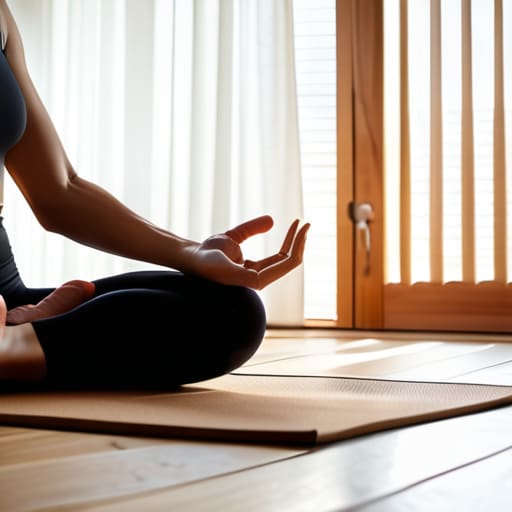
When you’re first starting out, the biggest mistake is trying to overhaul your entire schedule overnight. As someone who lives by my digital calendar, I know how tempting it is to block out an hour for a deep session, but consistency beats intensity every single time. I recommend starting with a short, manageable daily yoga routine for beginners—even just fifteen minutes before you dive into your inbox can change your entire physiological state. Think of it as a buffer zone between your sleep and your productivity; it’s that essential moment to ground yourself before the digital world starts demanding your attention.
To keep things sustainable, I love incorporating a mix of gentle yoga stretches and focused breathwork. You don’t need to master a headstand by Tuesday; instead, focus on simple yoga poses for flexibility like Child’s Pose or a gentle Cat-Cow to release the tension from sitting at a desk all day. I often find that pairing these movements with intentional breathing helps me reset my nervous system. It’s not about the perfect aesthetic you see on Instagram; it’s about creating a ritual that feels like a gift to your future, more focused self.
My Secret Sauce for Staying Consistent (Without the Burnout)
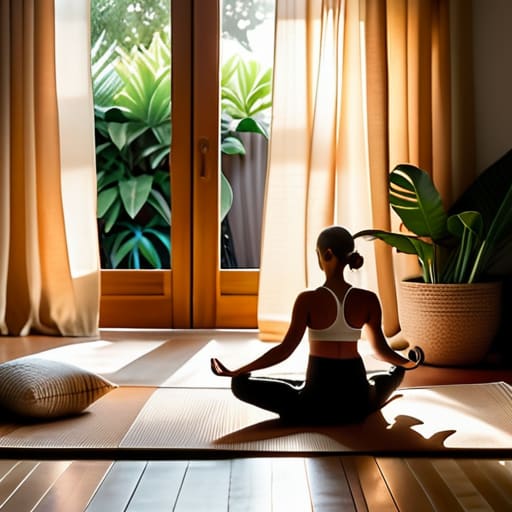
- Ditch the “all or nothing” mindset. I used to think if I didn’t do a 60-minute intense flow, it didn’t count. Trust me, even a ten-minute stretch between deep-work sessions on your laptop is a win for your nervous system.
- Curate your digital sanctuary. Since I live at the intersection of tech and wellness, I’m a huge fan of using apps to guide your practice, but remember to turn off those pesky notifications. Your yoga mat should be a tech-free zone for at least a few minutes to truly reset.
- Listen to your body’s biofeedback. In my nutritional science days, I learned how vital it is to tune into internal cues. If a pose feels like a “good” stretch, keep going; if it feels like a sharp “stop” signal, back off immediately. No ego allowed!
- Fuel your flow with intention. There is nothing worse than trying to hold a balance pose on an empty stomach or, conversely, right after a heavy meal. I love a light, nutrient-dense snack—maybe some fruit or a handful of nuts—about an hour before I roll out my mat.
- Make it a sensory ritual. To help your brain transition from “productivity mode” to “mindfulness mode,” try incorporating a small ritual, like lighting a specific candle or playing a lo-fi playlist. It signals to your brain that it’s finally time to breathe.
Finding Your Flow: My Top Three Tips for Staying Consistent
Don’t let the pursuit of the “perfect” setup stall your progress; remember that a simple mat and a little bit of floor space are all you really need to start reclaiming your calm.
Treat your yoga practice like a non-negotiable appointment in your digital calendar—scheduling it helps bridge the gap between your high-productivity mindset and your need for restorative self-care.
Listen to your body’s internal feedback loop rather than chasing a specific pose; the real magic happens when you use yoga as a tool for mindfulness rather than just another task on your to-do list.
Finding Your Flow
“Think of beginner yoga not as another task to tick off your productivity checklist, but as a vital software update for your soul—a way to recalibrate your system through movement so you can show up more fully in everything else you do.”
Olivia Peterson
Finding Your Flow Beyond the Mat
As we wrap up this deep dive, I hope you feel a little more equipped to step onto your mat without that overwhelming “where do I even start?” feeling. We’ve covered everything from selecting the right gear—because a decent mat really does change the game—to crafting a sustainable routine that actually fits into your busy, tech-driven life. Remember, the goal isn’t to achieve a perfect handstand by next Tuesday; it’s about building consistency and creating a dedicated space for yourself amidst the digital noise. Whether you’re using a high-tech yoga app to guide your flow or just following a simple sequence in your living room, the most important element is your commitment to showing up for yourself.
At the end of the day, yoga is so much more than just a physical workout; it is a vital tool for holistic well-being. It’s that sweet spot where mindfulness meets movement, helping you recalibrate your nervous system after a long day of staring at screens. Don’t be too hard on yourself if your mind wanders or your hamstrings feel tight—that’s just part of the beautiful, messy process of growth. Treat your practice with the same kindness you’d give a friend, and I promise you’ll start to see those benefits ripple out into your productivity and your peace of mind. Now, go roll out that mat and just breathe.
Frequently Asked Questions
I’m super busy with work—how much time do I actually need to dedicate to a session to see real benefits in my productivity and stress levels?
I totally get it—between back-to-back meetings and managing a startup, “extra time” feels like a myth. But here’s the secret: you don’t need an hour. Even a focused 15-minute flow can reset your nervous system and clear that mental fog. Think of it as a high-efficiency micro-break. Consistency beats duration every single time. Even a quick stretch session can recalibrate your focus, making your working hours way more productive!
Since I'm new to this, how can I tell if I'm actually doing a pose correctly or if I'm risking an injury?
That is such a valid concern! When I first started, I was constantly second-guessing myself, too. The golden rule? Listen to your body, not your ego. There’s a big difference between that “good” muscle burn and a sharp, pinching sensation—if it stings or feels unstable, back off immediately. I love using a mirror or even recording a quick time-lapse on my phone to check my alignment against a tutorial. It’s like a little tech-driven wellness check!
Do I really need to join a formal studio class right away, or can I effectively build a practice using apps and digital guides?
Honestly, you don’t need to rush into a studio membership! As someone who lives at the intersection of tech and wellness, I’m a huge fan of digital guides. Apps are incredible for building a low-pressure foundation on your own terms. However, once you feel comfortable with the basics, booking a real-life class is a game-changer for perfecting your alignment. Think of apps as your efficient training ground and studios as your ultimate leveling-up tool.